
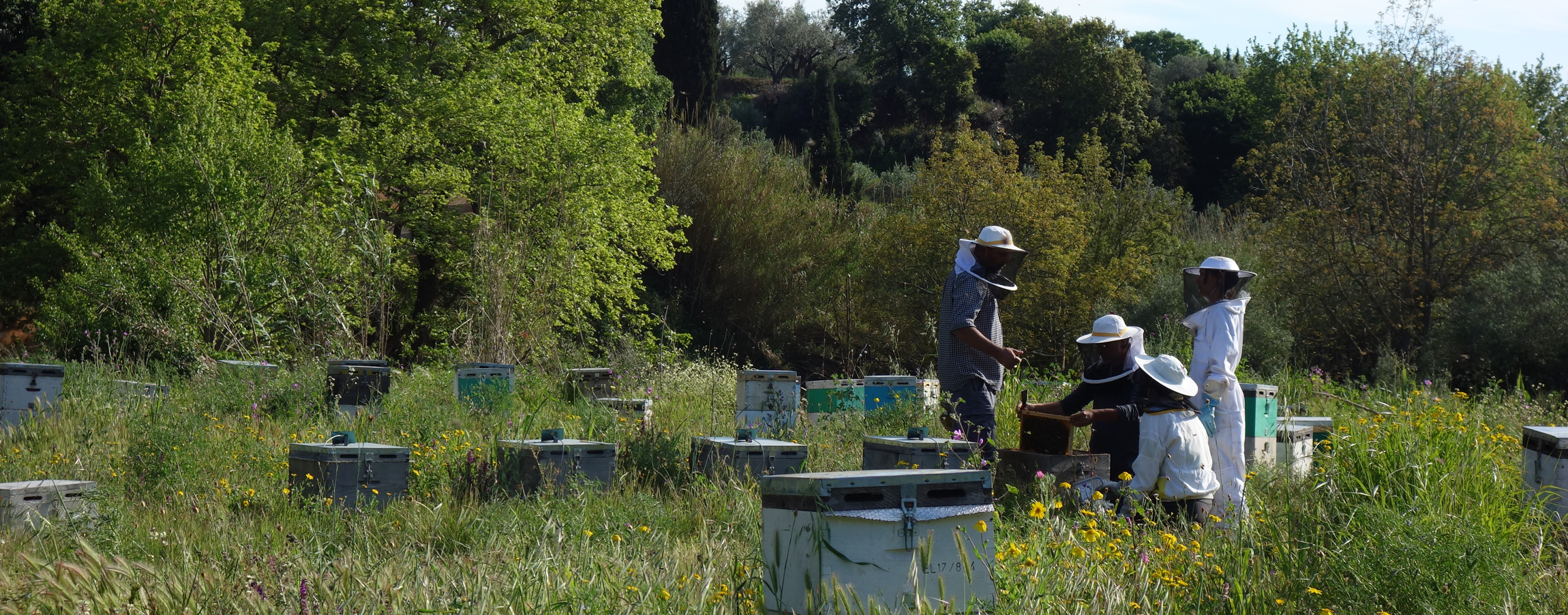
Collaboration process
Photo Credits: anne penders

Collaborate / Methodology

Collaboration process

Understanding the biodiversity dynamics of a place begins with listening—to the people and organisms that inhabit it.

Step by Step

Discuss → Define → Design → Investigate → Interpret → Share

A collaboration moves from a shared question to a monitoring design, then to observation, interpretation and a form of knowledge that can be used by the people involved.

01

Discuss

We start with a discussion and/or field visit to understand the context, the questions being raised, and what the collaboration should address.

Initial dialogue with land users or research teams to identify key site characteristics, historical practices, ecological priorities, and the specific questions that need answering.

✓ Context scoping & shared objective definition
02

Define

Together, we define the objectives, scope, responsibilities, methods and practical conditions of the collaboration.

Establishing transparent agreements on timeline, sampling permissions, data confidentiality, roles, and how observations will be returned to the community.

✓ Collaborative agreement & protocol roadmap
03

Design

We develop a research protocol adapted to the site, the questions being asked and the available resources.

Tailoring field observations, indicator metrics, sampling strategies, and seasonal observation frequencies to fit the terrain and agricultural calendar.

✓ Adapted monitoring methodology & survey schedule
04

Investigate

We carry out field monitoring, sampling and laboratory analyses to investigate biodiversity and ecological change.

Hands-on field observation of flora, insects, soil, identification, environmental logging, and laboratory analysis.

✓ Field observations & empirical biodiversity dataset
05

Interpret

We analyse the data and translate the results into ecological indicators, patterns and evidence relevant to the original questions.

Connecting species richness and distribution with molecular pathways and functions and nature health parameters back to land management actions and environmental dynamics.

✓ Interpreted ecological indicators & pattern analysis
06

Share

Results are returned in an appropriate form—reports, datasets, presentations, scientific publications or practical recommendations—and discussed with the people involved.

Returning actionable feedback through participatory debriefs, visual farm reports, policy datasets, or peer-reviewed publications.

✓ Tailored reports, datasets & actionable recommendations
Contact us → For institutions & partners → For land users & local initiatives →