

Project
MEELiH
Brief description
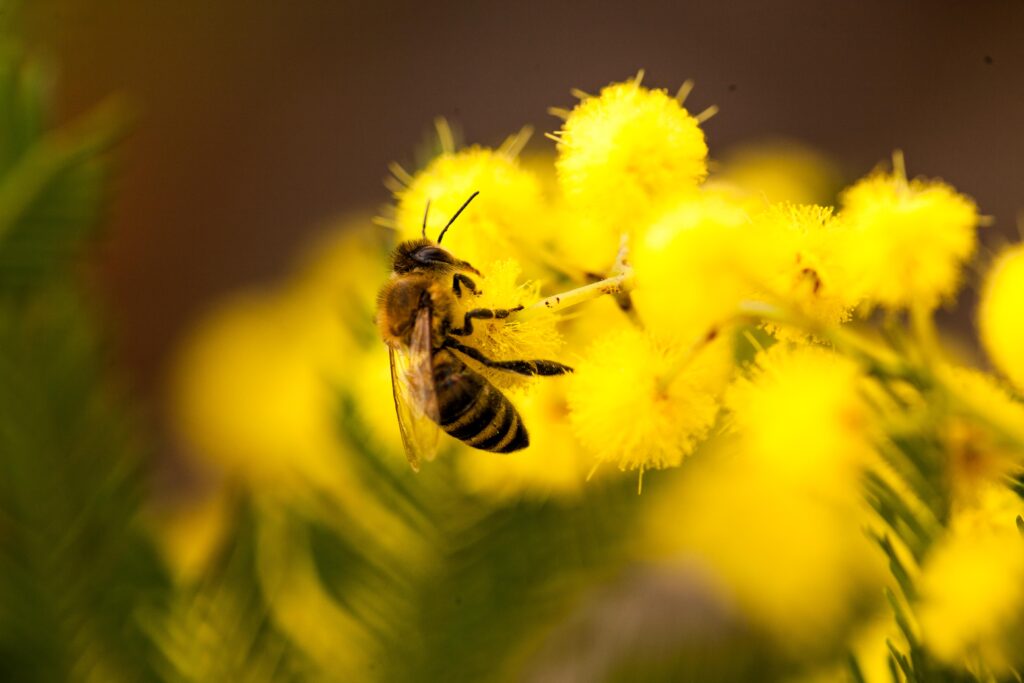
MEELiH investigates how honey bees respond to sublethal pesticide exposure, from behavioural changes to underlying molecular mechanisms.
Project Context
Low pesticide doses can alter honeybee learning and memory, but these effects are difficult to measure under natural conditions. MeeLiH investigated how pesticide exposure affects behavioural adaptation and the molecular mechanisms involved in memory.
Approach
Field-based learning and memory tests were combined with video tracking, molecular analyses and brain-cell imaging.
Outcome
The project developed field measures of bee memory and adaptation and identified molecular pathways affected by pesticide exposure. These tools help assess pesticide effects on bee health under realistic conditions.
Partners and Funders
BSRC Alexander Fleming, Fondation Santé, Marie Skłodowska-Curie Actions


External Project Website