
Project
SPOHD
Brief description
SPOHD investigates how hive transhumance influences the spread of bee diseases and colony health during seasonal honey production.
Project Context
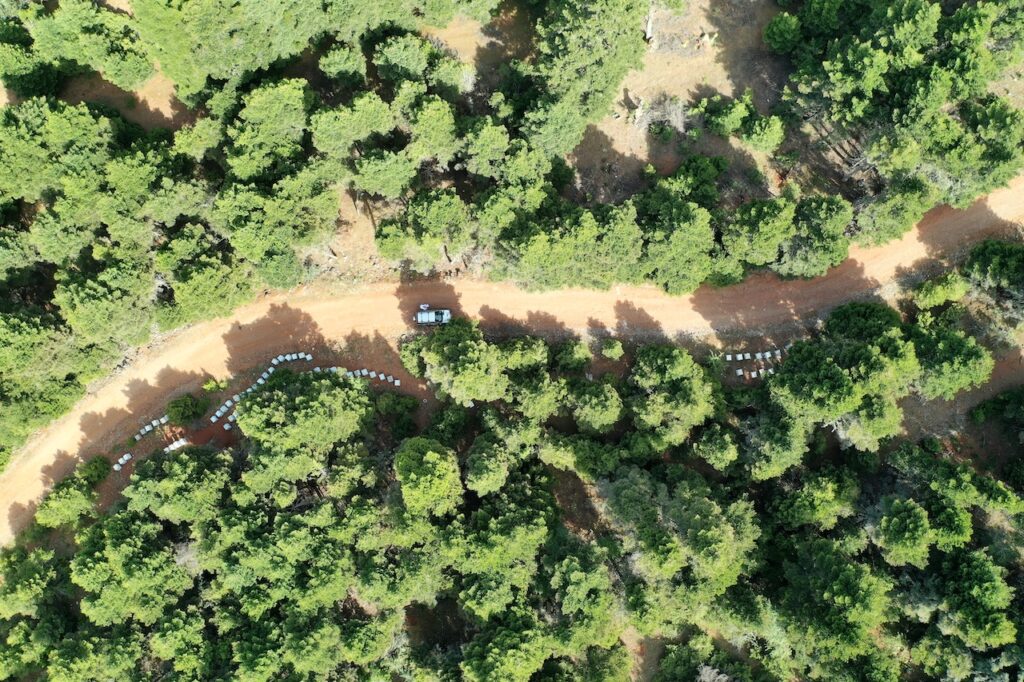
Moving hives between regions for seasonal honey production can expose colonies to new pathogens and ecological conditions. The project examined how transhumance affects bee health, microbiota and pathogen exposure during orange blossom and fir honey production.
Approach
Bee and honey samples were collected around hive movements between Attica, Argolis and Boeotia. Gut microbiome profiling and shotgun metagenomics of honey were used to track microbes, pathogens, plant resources and other organisms associated with the hive environment.
Outcome
Honey metagenomics non-invasively tracks foraging resources, gut microbiota, and pathogens from a single sample. Experimental tracking of hives moved to agricultural environments demonstrated immediate benefits to brood development alongside long-term risks, including increased Varroa infection and gut microbiome disruption.
Associated publications and Outcome
Partners and Funders
BSRC Alexander Fleming, Ministry of Rural Development and Food